

If high effort makes you feel like you can’t get enough air, you’re not weak, you’re human. VO2 max breathing exercises won’t magically turn a tough interval into a stroll, but they can make hard work feel more controlled, less panicky, and easier to repeat.
VO2 max is simple: it’s how well your body can use oxygen when you’re working near your limit. Training is still the main driver, but breathing drills can improve comfort, reduce that “air hunger” spiral, and help you recover faster between reps.
Quick safety note: if you have heart or lung conditions, check with a clinician first. Stop any drill if you feel dizzy, numb, or unwell.
Pausa exists because panic attacks can make breathing feel impossible. The surprising fix wasn’t long meditation sessions or complicated routines. It was short, guided breathing you can do in real life, especially when stress hits.
VO2 max basics: what breathing can and can’t change
VO2 max has a few major “bottlenecks.” Your heart has to pump enough blood, your blood has to carry oxygen well, and your muscles have to use that oxygen efficiently. That’s why VO2 max workouts focus on the engine: hard intervals, smart progression, and consistency.
Breathing matters, but in a different way. During tough efforts, the goal isn’t “more oxygen at any cost.” It’s better ventilation with less wasted effort. That means staying relaxed, keeping rhythm, and tolerating the rise in carbon dioxide (CO2) that triggers the urge to gasp.
So no, a breathing drill won’t instantly raise your VO2 max score. What it can do is help you:
- Stay calmer when breathing gets fast
- Reduce extra tension in your neck, jaw, and shoulders
- Recover your breathing faster between intervals
- Avoid over-breathing that makes you lightheaded
This tends to help runners, cyclists, rowers, HIIT fans, weekend athletes, and also stressed beginners who interpret normal training breathlessness as danger. For a sport-focused view of how breathing habits affect performance, see Trail Runner’s guide to breathing for better performance.
The real goal: less “air hunger” and more control at high effort
That desperate feeling of needing air is often CO2-driven air hunger, not a true lack of oxygen. As intensity rises, your body produces more CO2. Your brain reads that as “breathe now,” even if oxygen levels are fine.
When you panic-breathe, you often recruit the upper chest, shrug the shoulders, and clench the jaw. It’s like sprinting with your parking brake on. You spend energy on tension instead of movement.
A simple cue that works under stress is this: exhale fully, then inhale low into the belly and side ribs. Think “wide ribs,” not “big chest.” Even two calmer breaths can bring you back in control.
Nasal vs mouth breathing: what to use and when
Nasal breathing can be great at easy intensities. It naturally slows airflow, encourages a steadier rhythm, and can keep you from going too hard too soon.
Near VO2 max, forcing nose-only breathing can backfire. When you’re truly near your limit, you may need mouth breathing to move enough air. That’s not failure, it’s normal physiology.
A practical approach by intensity:
- Easy work and warm-ups: nasal breathing if comfortable.
- Tempo and threshold: nasal inhale, mouth exhale often feels smoother.
- VO2 max intervals: mouth breathing is fine, prioritize a controlled exhale.
- Congestion or allergies: don’t fight your airway, adapt for the day.
6 practical VO2 max breathing drills you can start this week
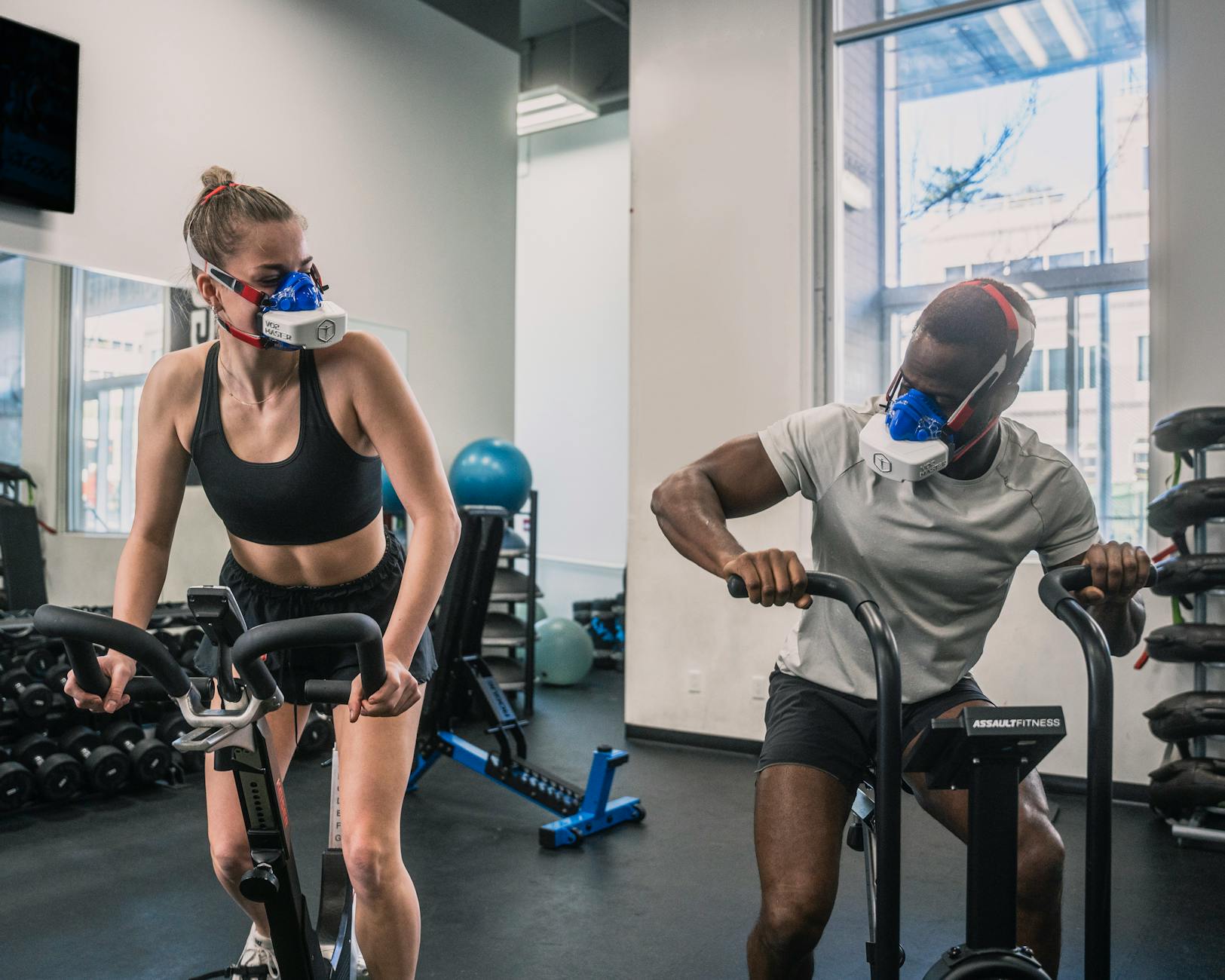
Photo by VO2 Master
These drills are designed to fit into normal training. Most days, total time is 10 to 15 minutes.
Resonant breathing for recovery days and cooldowns
When to do it: cooldowns, rest days, pre-sleep wind-down
How long: 3 to 10 minutes
Steps:
- Sit or lie down, shoulders heavy.
- Inhale gently for about 5 seconds.
- Exhale smoothly for about 5 to 6 seconds.
- Keep the breath quiet and even.
What you should feel: your heart rate settling, your face unclenching, your exhale getting longer without strain. This is the kind of simple, repeatable practice Pausa is built around, short guided sessions that help you keep a streak without turning it into a project.
Box breathing to reset before hard intervals
When to do it: 1 to 3 minutes before a workout, or between sets if anxiety spikes
How long: 1 to 3 minutes
Steps:
- Inhale for 4 seconds.
- Hold for 4 seconds.
- Exhale for 4 seconds.
- Hold for 4 seconds.
Beginner option: 3-3-3-3. Skip long holds if they make you dizzy.
What you should feel: a “clean reset,” like your mind just got quieter. Box breathing is less about oxygen and more about composure.
CO2 tolerance ladder: train the urge to gasp safely
When to do it: rest days, after easy training (never during hard work)
How long: 5 to 8 minutes
This is controlled discomfort training. Not panic training.
Steps (seated or standing still):
- Breathe normally for 30 seconds.
- Do a gentle exhale (don’t force it), then hold for 5 to 15 seconds.
- Breathe easy for 30 to 60 seconds.
- Repeat for 5 rounds.
What you should feel: a mild urge to breathe that you can ride out calmly. Over time, many people feel less “air hunger” during VO2 reps. For a deeper look at breath-holding in sport, read this overview on breath-holding effects in athletes.
Warm-up “breathing gears” to find your rhythm fast
When to do it: before intervals or hard runs
How long: 6 minutes
2 minutes: easy nasal breathing.
2 minutes: nasal inhale, longer mouth exhale (as if fogging a mirror).
2 minutes: free breathing, relax shoulders and jaw.
Cues: ribs expand sideways, exhale fully, keep your tongue soft in your mouth.
What you should feel: like you’ve “found the groove” before the first rep, instead of scrambling for air from minute one.
Hard-interval breathing cue: exhale-led breathing under load
When to do it: during VO2 max reps
How long: the work interval
Rule: keep the exhale slightly longer than the inhale, even when breathing fast.
Try a simple rhythm:
- Running: inhale for 2 steps, exhale for 3 steps.
- Cycling: inhale for 2 pedal strokes, exhale for 3.
Let it break naturally when intensity spikes, then return to it when you can.
What you should feel: less “thrash breathing,” more repeatability. Pair it with posture: tall chest, soft shoulders, loose hands.
Downshift drill after intervals: 90 seconds to calm the system
When to do it: right after a hard rep, during easy jog or spin
How long: about 90 seconds
Steps:
- Take 3 big sigh-like exhales (not forced, just clear).
- Then take 6 slow breaths, exhale longer than inhale.
What you should feel: the panic edge fading. Your breathing can still be heavy, but it feels organized again. This is also useful outside training, after a tense meeting or a stressful commute.
How to plug these drills into your training without overthinking it
Breathing practice works best when it’s boring in a good way. Same drills, small dose, done often.
If you want guided help, use Pausa’s download page and keep it simple. The app is designed for short sessions, not long meditations, and it’s available on iOS and Android.
Two easy weekly plans: beginners and regular exercisers
Beginner plan (low stress, high consistency):
- 3 days/week: easy walk, jog, or bike.
- After each session: resonant breathing, 5 minutes.
- Before each session: box breathing, 1 to 2 minutes.
Regular exerciser plan (performance plus recovery):
- 2 days/week: VO2-style intervals.
- Between reps: downshift drill.
- 2 days/week (rest or easy days): CO2 tolerance ladder.
- After hard days: resonant breathing, 5 to 10 minutes.
Track progress in real terms: fewer panic-like moments, steadier pacing in later reps, and faster “I’m okay again” recovery.
Common mistakes that make breathing drills backfire
The biggest problems come from trying to win the drill.
- Forcing nasal breathing at max effort: use it at easy pace, don’t fight your body in VO2 reps.
- Holding too long: keep breath holds gentle, stop well before panic.
- Over-breathing: if you get lightheaded or tingly, slow down and lengthen the exhale.
- Chest-only breathing: practice expanding the belly and side ribs.
- Tension stacking: scan your jaw and shoulders during intervals.
Pausa’s approach is simple on purpose: short guided breathing, done when you need it, so it doesn’t become one more task.
A simple next step for stronger, calmer hard efforts
VO2 max training teaches your body to use oxygen under pressure. Breathing drills teach you to stay composed when that pressure spikes, and that supports stress relief in daily life, too.
For the next 7 days, pick just two drills: one calm drill (resonant breathing) and one workout drill (downshift or exhale-led rhythm). Keep it small, repeat it often, and notice what changes.
If you want guidance and companionship in the moments breathing feels hard, try a session in Pausa. It was built after real panic attacks, for real life, so you feel less alone when your body is loud and your mind is tired.